Published by HALOX Co.
What an SR-22 actually is
How California, Texas, and Illinois describe the certificate an insurer files, how long each page keeps it, and why Florida, Virginia, and Delaware do not all use the same name.
Is an SR-22 a type of insurance?
It is a certificate of financial responsibility. Texas DPS calls it a Financial Responsibility Insurance Certificate and says it certifies that the driver is maintaining the minimum liability insurance the law requires. The department’s FAQ says the insurance carrier files it, and that an insurance card or a policy will not be accepted in its place. Florida’s insurance page defines the filing, written there as SR22, as a certification of bodily-injury and property-damage liability for reinstatement under the Florida Financial Responsibility Law. The policy is the coverage. The SR-22 is the certificate.
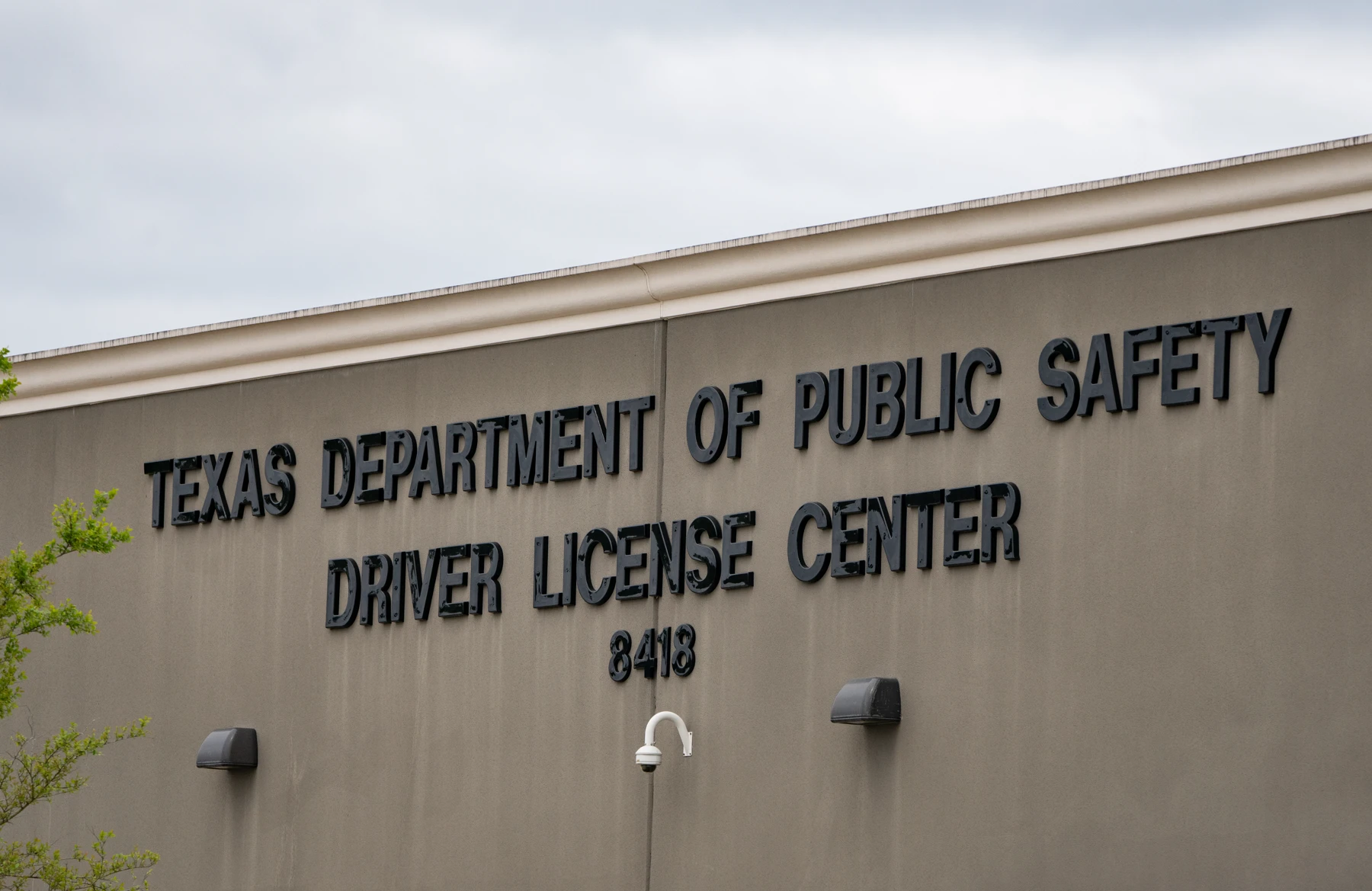

A close crop of a plain tan-gray concrete wall under an overcast sky. Raised black letters read Texas Department of Public Safety, Driver License Center, and 8418. Two wall lamps, a small security camera, and a leafy branch at the left edge. The file description places the building at the Texas DPS Houston North driver license center. The photograph shows the office, not a certificate.
What puts it on the record
Texas’s certificate page, dated September 16, 2020, requires the filing after a crash suspension, a second or later conviction for no motor vehicle liability insurance, or a civil judgment. A security deposit for a crash suspension or a crash-default suspension requires one too. The November 18, 2020 FAQ adds examples that include driving while intoxicated, drug offenses, driving while the license is invalid, and multiple no-insurance convictions, and says the list is not complete.
California’s driver handbook uses the certificate after a collision without proper insurance. The suspension can run up to four years, fault does not matter, and the license can come back during the last three years if the driver provides a California Insurance Proof Certificate and keeps it for that period. The handbook’s name for the certificate includes the SR-22. The insurance page lists that SR-22, for broad coverage or an owner’s policy, apart from the electronic report insurers send for private-use vehicles.
Illinois requires it for safety-responsibility suspensions, unsatisfied-judgment suspensions, revocations, mandatory insurance supervisions, and three or more convictions for mandatory insurance violations.
Florida’s crash page requires an insurer-certified SR-22 when an at-fault driver was charged with a moving violation, the report notes injuries or possible injuries, and the required liability coverage was not in effect. The DUI FAQ requires an FR-44 after a DUI conviction after October 1, 2007. The amounts it prints are higher than the liability amounts the crash page prints for the SR-22. Virginia’s certifications page says FR-44 limits are double the SR-22 limits: an SR-22 for an unsatisfied judgment, an uninsured-motor-vehicle suspension, missing monitored proof, or a falsified certification, and an FR-44 for driving under the influence, maiming while under the influence, or driving while the license has been forfeited. The insurance page also requires an SR-22 before an uninsured vehicle owner is reinstated.
Delaware’s insurance FAQ does not call its audit certification an SR-22. The owner has the insurer send a Delaware Insurance Certification, the FR-19, for continuous coverage since the verification date and coverage in force now. The form, revised April 2024, is accepted only from a licensed Delaware insurance agency or insurer.
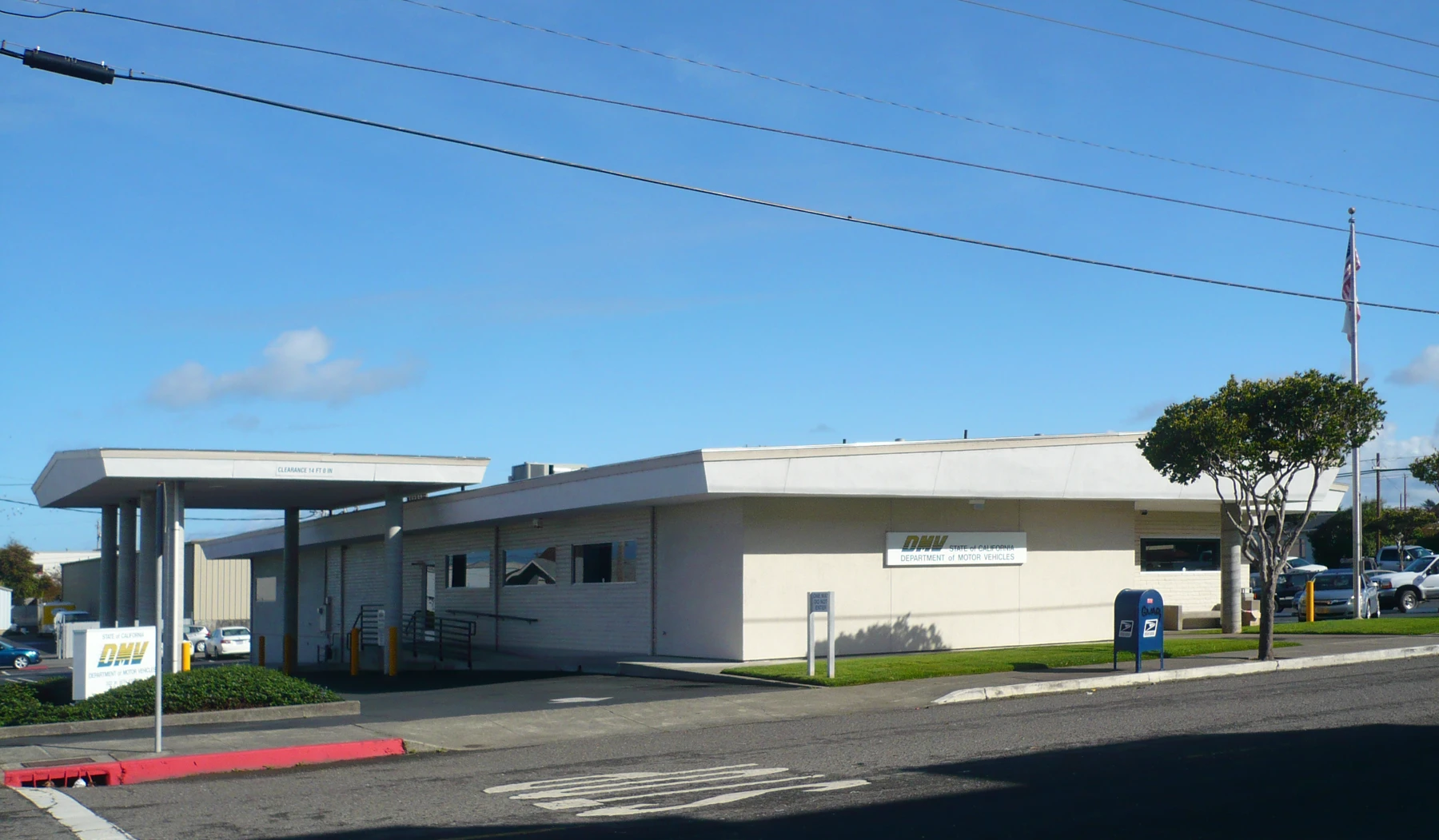

A long single-story beige office under a blue sky, a flat white roof edge, and a covered drive-up canopy on the left. The wall sign reads DMV, State of California Department of Motor Vehicles. A DMV monument sign at the left, a blue USPS mailbox, one flagpole with a U.S. flag, a tree, cars parked at the right, and power lines across the sky. The photographer places it in Eureka, California. The photograph does not show a certificate.
The company sends it, and the office keeps it
Texas’s FAQ says the carrier files the certificate. Not every company offers one. With none on file, the driving privilege and the registration may be suspended. In Illinois the certificate goes to the Secretary of State, and the driver receives a copy. Virginia says electronic filing puts the certification on the DMV record. California’s vehicle code says proof may be the carrier’s written certificate that a liability policy is in force on that date, and the department accepts it. The insurance page still lists the SR-22 among documents DMV may ask the person to submit, and a policy copy is not on that list.

A tall, many-story pale limestone office building with vertical bands of windows, seen at an angle across a lawn. A black lamppost and a flower planter in front, trees on both sides, and a wooded hill behind at the left, under a blue sky. The Library of Congress record places the building at the West Virginia DMV on the capitol grounds in Charleston, closed for renovation in 2015. It does not show a certificate.
How long it stays, and what a lapse does
Texas’s certificate page keeps the certificate for two years from the conviction that requires it, or from the crash judgment. The FAQ starts that clock at the most recent conviction or the judgment, and a late filing does not restart it. Illinois says three years. Florida’s crash page says three years from the designated suspension date for the SR-22, and the DUI FAQ says three years from reinstatement for the FR-44. Virginia’s insurance page says three years for the uninsured-owner SR-22. The certifications page states no period for the FR-44. California’s three years are the handbook period above.
Texas’s certificate page says the insurer notifies the department when an SR-22 is cancelled, terminated, or lapses. If no new certificate was filed before that cancellation, the driving privilege and the registration may be suspended. Illinois names the notice an SR-26 cancellation certificate, sent to the Safety and Financial Responsibility Section. The driving record stays suspended until the insurance filing is reinstated.
A driver who does not own the car
Texas tells a driver without a vehicle to ask about a non-owner SR-22, and the FAQ says the certificate is still required. Illinois has an operator’s certificate for any non-owned vehicle, an owner’s certificate for owned vehicles, and an operators-owners certificate for both. California defines an operator’s policy as coverage for the named person in a motor vehicle that person does not own, including one bought later for no more than 10 days. The policy definition treats an owner’s policy, an operator’s policy, or both, as the certified proof. The DMV page describes the SR-22 it may ask for as broad coverage or an owner’s policy, and does not describe the operator’s policy.
Sources
- California DMV: Financial responsibility, insurance requirements, and collisions — Uninsured-collision suspension of up to four years regardless of fault, and a California Insurance Proof Certificate maintained during the three-year period
- California DMV: Insurance requirements — SR-22 listed for broad coverage or an owner's policy among documents DMV may ask for, separate from the insurer's electronic report of private-use vehicle insurance
- California Vehicle Code: certificate of an insurance carrier — Written certificate of an insurance carrier authorized in the state, accepted by the department as proof that a liability policy is in effect on the certificate date
- California Vehicle Code: motor vehicle liability policy — A motor vehicle liability policy means an owner's policy or an operator's policy, or both, when the carrier certifies it as proof of financial responsibility
- California Vehicle Code: operator's policy — An operator's policy covers the named person using a motor vehicle that person does not own, and a later-purchased vehicle for a limited period from the purchase
- Texas DPS: Financial Responsibility Insurance Certificate (SR-22) — September 16, 2020 page; certificate of minimum liability insurance, crash and repeat no-insurance and judgment triggers, two-year period, insurer notice of cancellation, and a non-owner policy
- Texas DPS: SR-22 proof of financial responsibility — November 18, 2020 FAQ; the carrier files the certificate, conviction examples, two years from the most recent conviction or judgment, a non-owner policy, and a lapse
- Florida Highway Safety and Motor Vehicles: Insurance requirements — SR-22 defined as a filing certifying bodily-injury and property-damage liability for reinstatement under the Florida Financial Responsibility Law
- Florida Highway Safety and Motor Vehicles: Involved in a crash — At-fault injury crash without the required liability coverage; the insurer certifies the SR-22; three years from the designated suspension date
- Florida Highway Safety and Motor Vehicles: DUI frequently asked questions — FR-44 after a DUI conviction after October 1, 2007, maintained for three years from reinstatement of the driving privilege
- Virginia DMV: Financial responsibility certifications — SR-22 and FR-44 lists, FR-44 limits double the SR-22 limits, and electronic filing onto the DMV record
- Virginia DMV: Insurance requirements — An uninsured vehicle owner files an SR-22 with DMV for three years to be reinstated
- Illinois Secretary of State: Financial responsibility (SR-22) insurance — Certificate sent to the Secretary of State and a copy to the driver, operator's and operators-owners certificates, three years on file, and an SR-26 cancellation notice
- Delaware Division of Motor Vehicles: Vehicle liability insurance FAQ — An insurance audit is answered by an insurer-submitted FR-19 certifying continuous coverage since the verification date and coverage presently in force
- Delaware Division of Motor Vehicles: Insurance certification — Revision April 2024; the certification is accepted only from a licensed Delaware insurance agency or insurer
References checked .