Published by HALOX Co.
What a shock absorber actually does
Distinguish spring support, hydraulic damping, monotube and twin-tube construction, and the structural role of a suspension strut.
A spring stores energy when the wheel moves over a bump and releases it afterward. A conventional shock absorber controls that motion: its piston forces oil through restricted passages and valves, converting movement into heat. Damping helps the tire maintain road contact and reduces repeated bouncing. Monroe’s shock and strut guide separates that job from supporting the car’s weight.
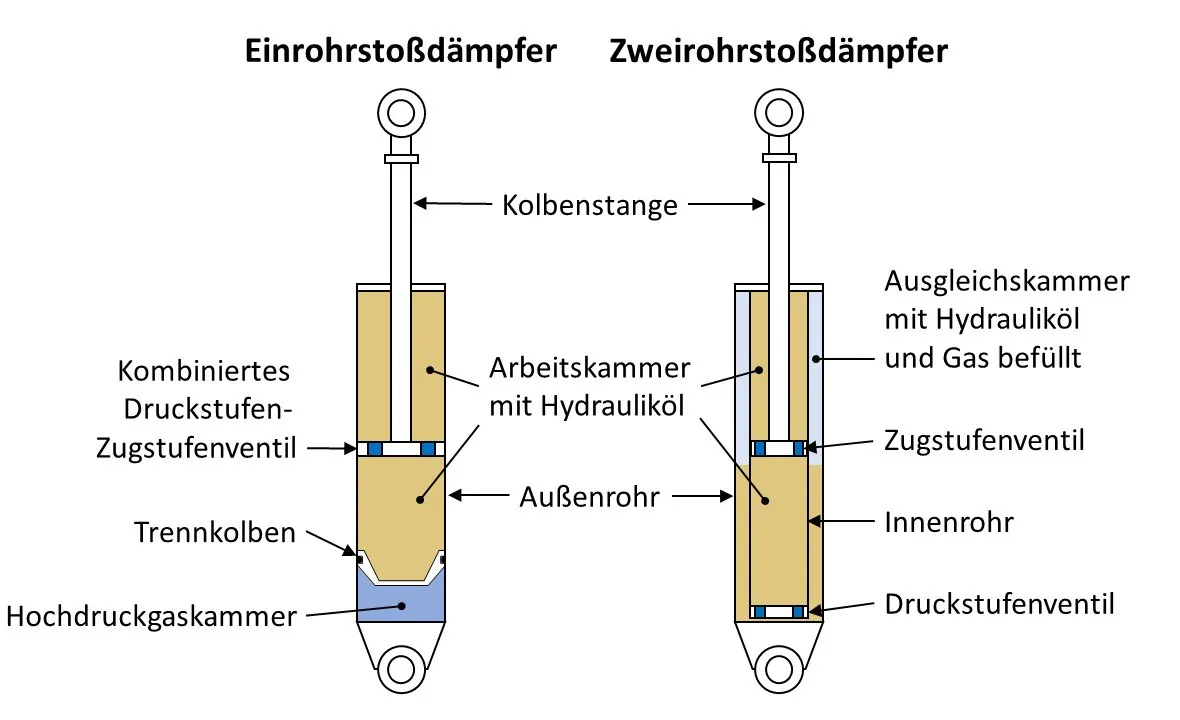

Two ways to package the oil
In a typical monotube damper, a floating piston separates the oil from a pressurized gas chamber. The gas space accommodates the volume of the rod entering the tube. A twin-tube design places the working cylinder inside a reservoir tube; oil displaced by rod movement passes between them. In both, controlled oil flow supplies the damping. Gas pressure does not turn an ordinary damper into the car’s main spring. Monroe describes the two constructions.
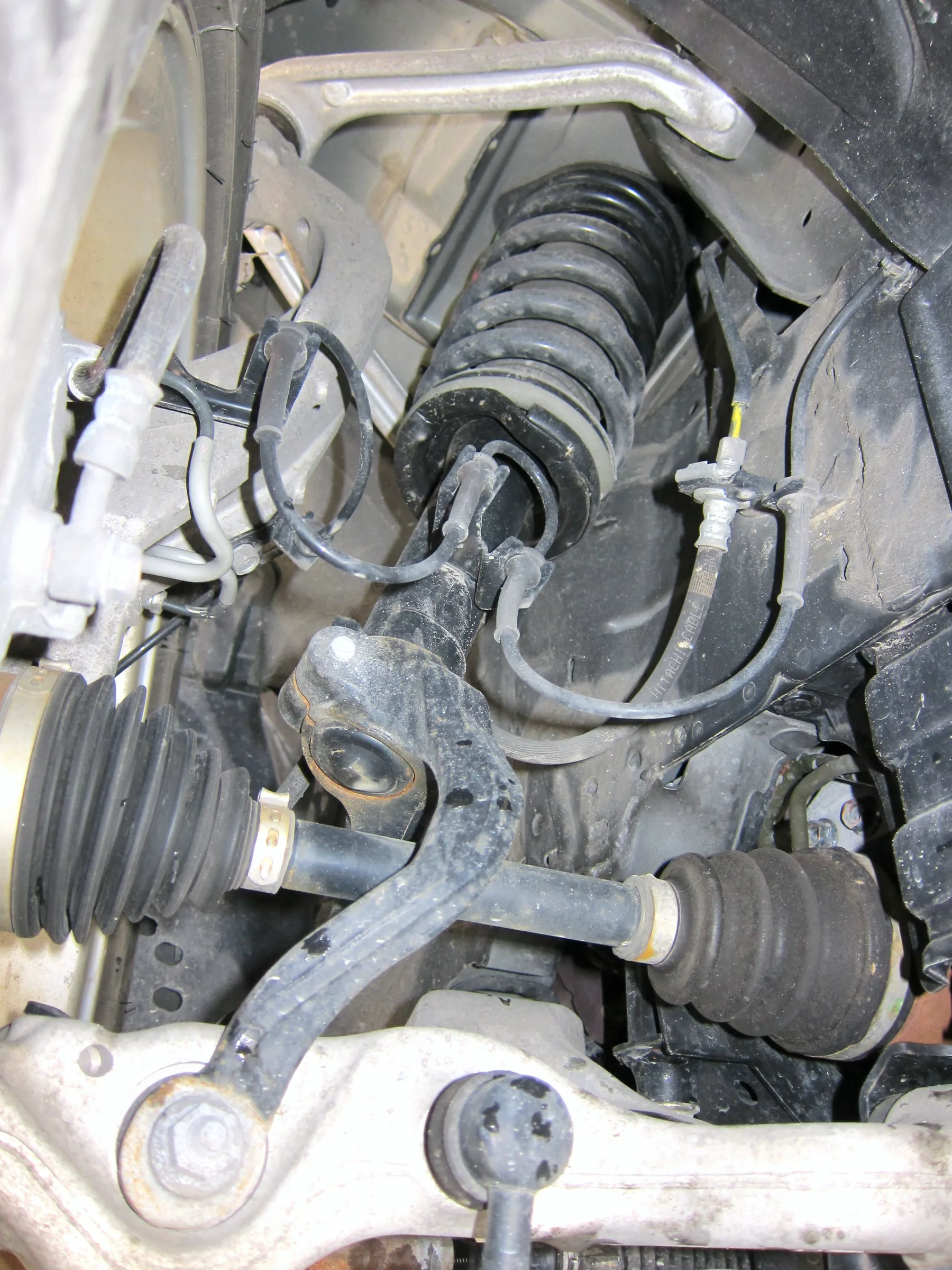


A coil around a damper does not, by itself, make the assembly a MacPherson strut. In a suspension with separate locating arms, those arms constrain the wheel while the damper controls movement. A strut also acts as a structural suspension member, carrying side loads and helping maintain wheel position. Follow the attachment points rather than judging by the coil’s location. Monroe explains the structural difference.

Combined units still have distinct functions
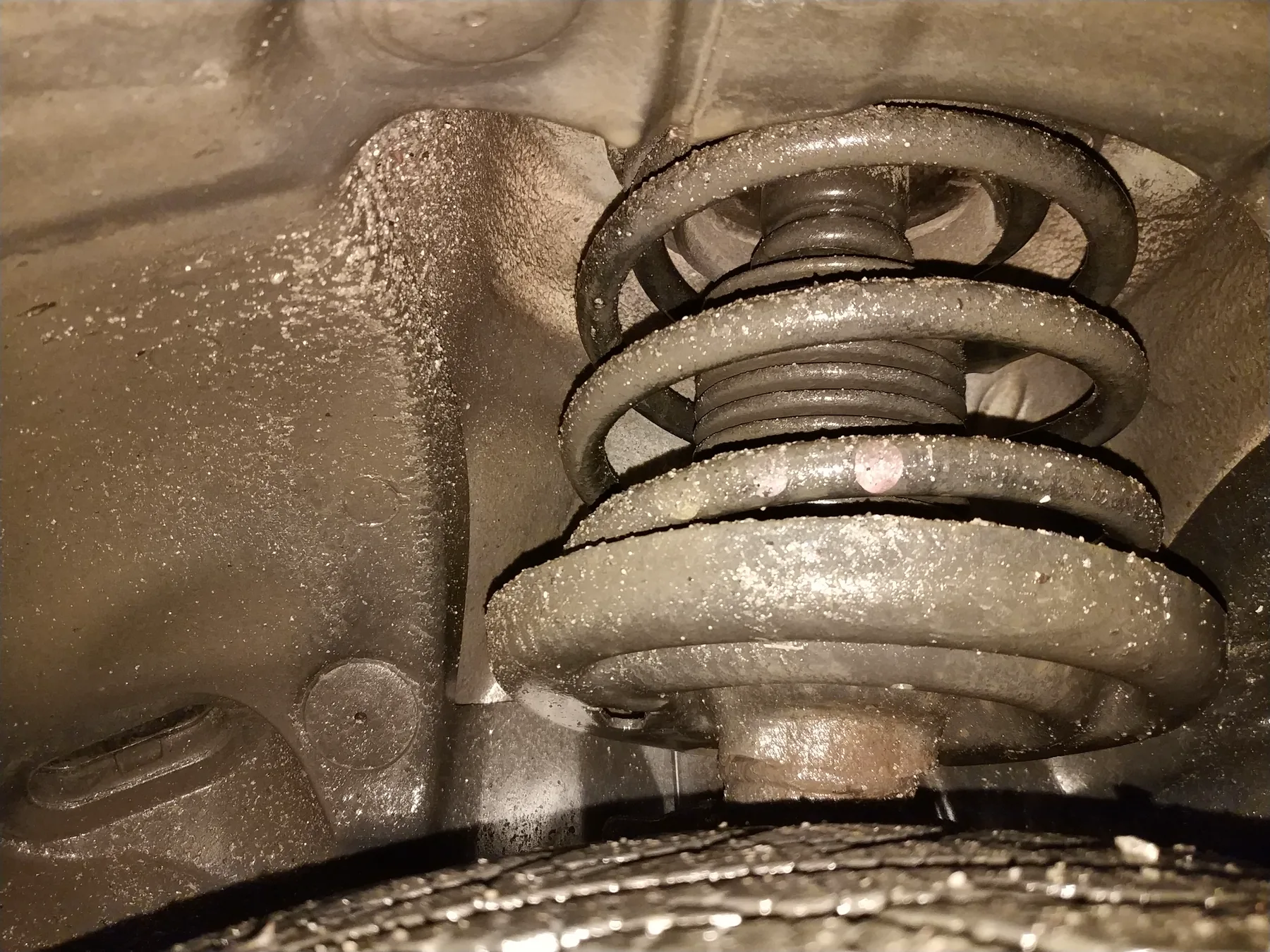
An air spring supports load through air pressure. An assembly can combine that spring with a hydraulic damper, just as a coil-over combines a steel spring and damper. Some load-assisting air shocks also contribute spring force, so the word “shock” on a product is not a complete description of its construction.
Repeated bouncing can indicate reduced damping, but it cannot identify an internal valve failure on its own. Mounts, springs, tires and the rest of the suspension need inspection too. The photos illustrate assemblies; they do not show their condition in operation.
Sources
- Monroe: shocks versus struts — Hydraulic damping, weight support and structural strut role
- Monroe: twin-tube versus monotube shocks — Oil/gas packaging and load-assisting shock variants
References checked .