Published by HALOX Co.
What a MacPherson strut actually does
Why a MacPherson strut has a wheel-locating structural job as well as damping, and how the spring, mount and lower arm divide the work.
A MacPherson strut is part of the structure guiding the wheel, as well as a damper controlling suspension movement. That structural job is what distinguishes it from an ordinary shock absorber mounted between two already-located suspension points.
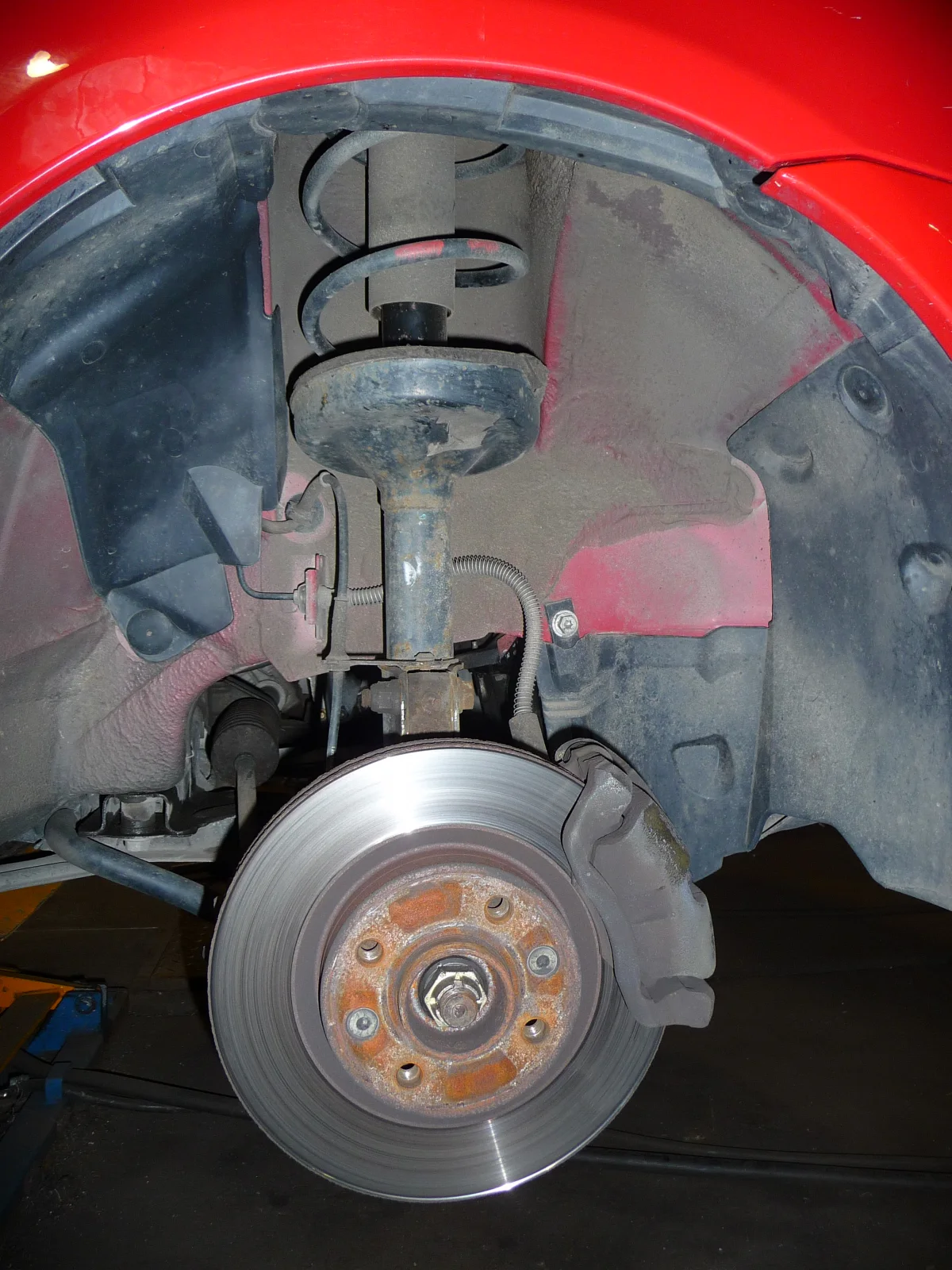

In the conventional layout, the strut joins a body-side upper mounting point to the steering knuckle. A lower control arm connects the knuckle’s lower region to the body or subframe. Together those parts guide the wheel. The strut takes the place of the upper-arm and upper-ball-joint arrangement used in a conventional wishbone layout, as Monroe explains.
Support, damping and steering share the assembly
The coil spring supports the car through deflection. The damping unit meters hydraulic movement to control how the spring and suspension settle. The structural housing also carries side loads and helps keep the wheel aligned. Calling the complete unit a shock overlooks that last job.
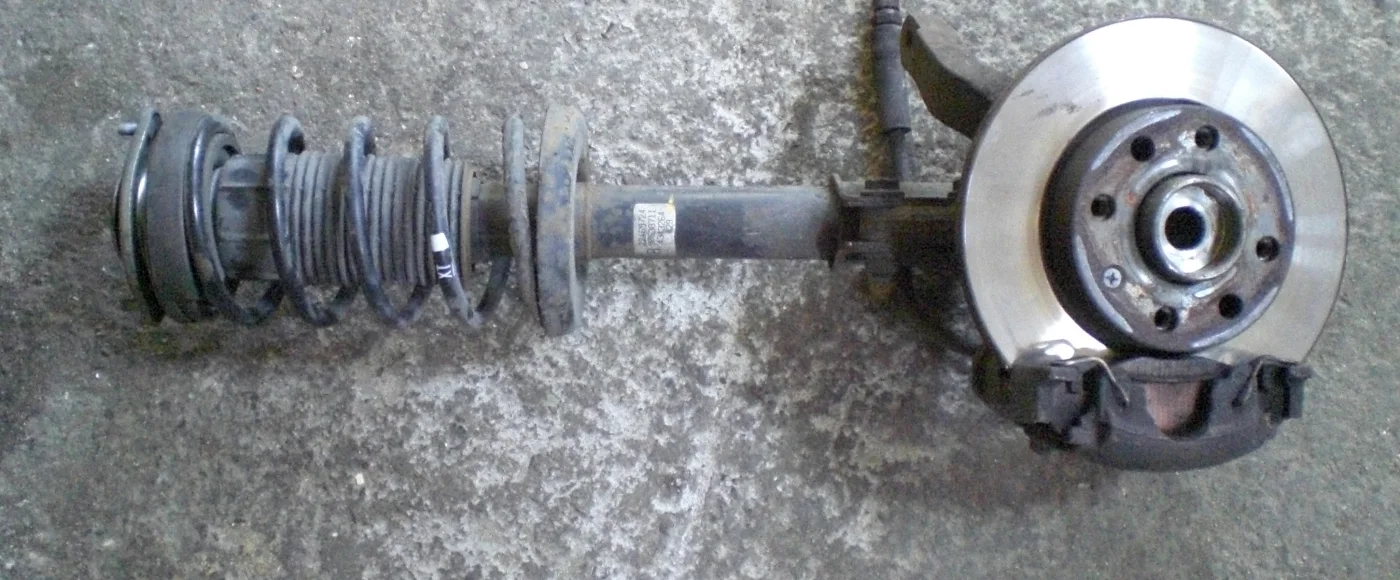


At a steered corner, the assembly must be able to turn relative to the body. A bearing at the upper mount is part of that steering pivot arrangement. KYB distinguishes mounts that need this bearing from other applications; a non-steering rear strut should not be assumed to turn with a steering wheel.
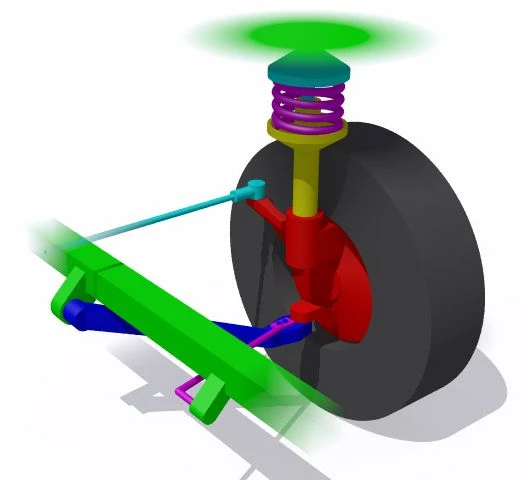

The diagram also makes the limit of the word strut clear. It is not the whole suspension: the lower arm, joints and steering link still have their own tasks. Drive torque may reach the same hub through a shaft, but that does not determine whether its suspension uses a strut. Locating the wheel and driving it are separate design questions.
Sources
- Monroe: shocks versus struts — Structural locating role, spring support and damping
- KYB: strut-mount bearings — Bearing when the mount is a steering pivot
References checked .