Published by HALOX Co.
What a differential actually does
A differential lets the two wheels on an axle take a corner at different speeds. It is not the transmission, and it is not AWD or 4WD by itself.
In a turn, the outside wheel follows a longer path than the inside wheel. If both driven wheels were constrained to the same speed, that difference would have to be absorbed by tire slip or driveline strain. A differential allows the axle outputs to rotate at different speeds while still receiving drive.
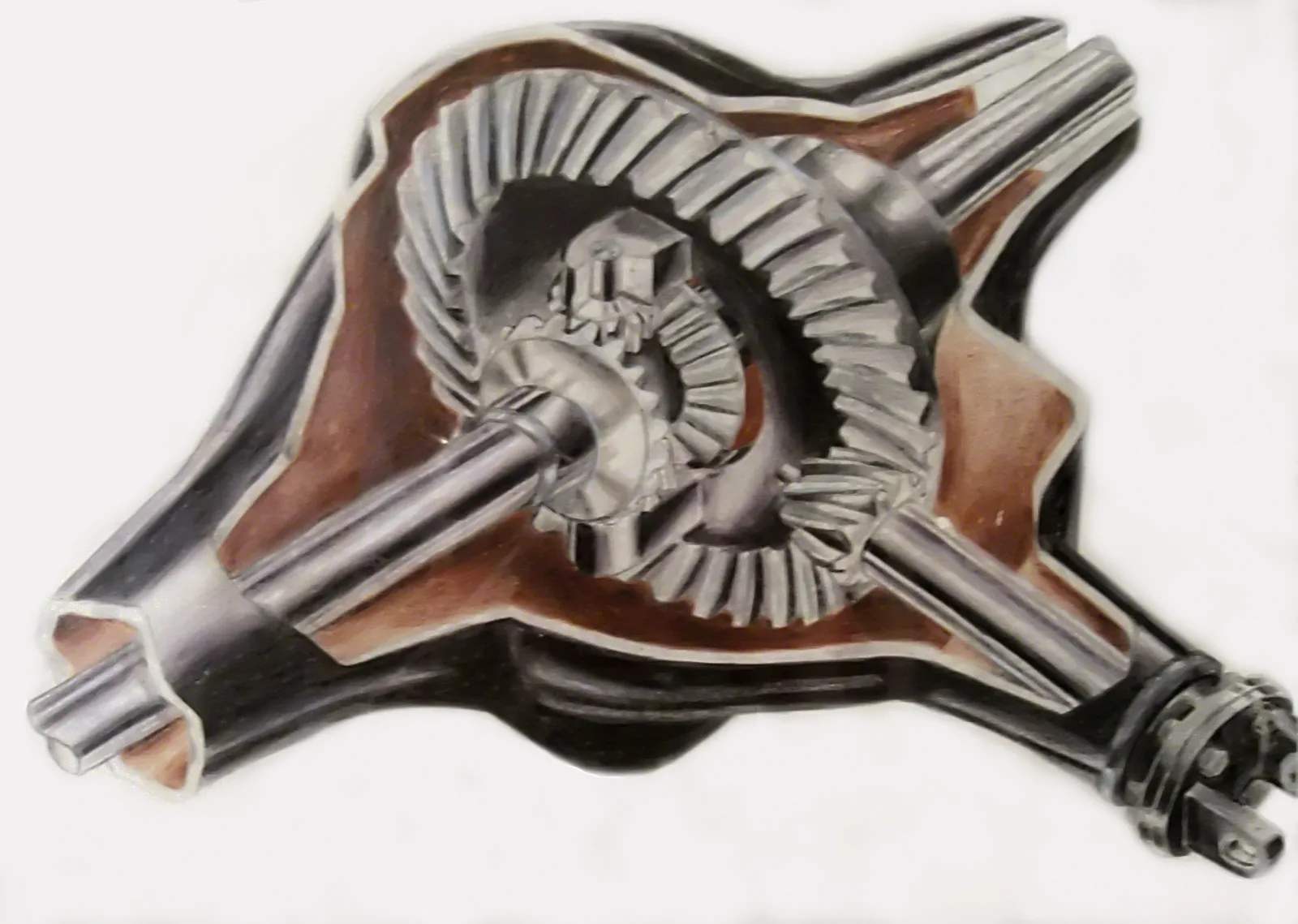

The illustrated rear-axle layout uses a pinion to drive a ring gear attached to the differential carrier. Inside, side gears connect to the axle outputs and smaller bevel gears permit relative motion between them. The carrier can turn while one output slows and the other speeds up.
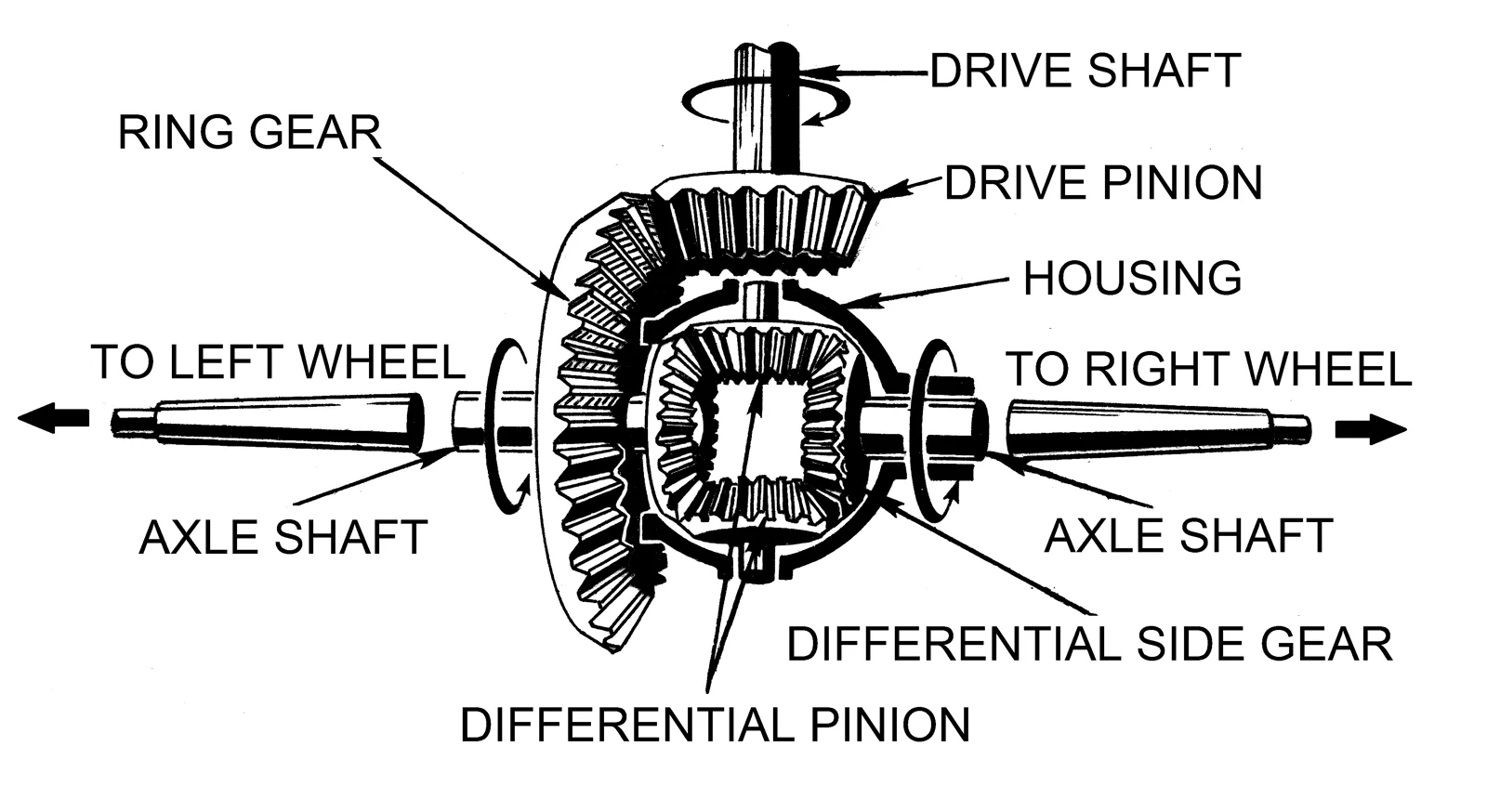


Eaton’s open-differential explanation describes the reason for separate wheel speeds. The drawing helps identify the torque path; the differential function is the freedom for the two outputs to differ in speed.
That freedom has a traction tradeoff
An open differential can struggle to move the vehicle when one wheel has very little grip, even if the other has useful traction. Eaton identifies ice and an unloaded wheel as examples. Different speeds remain possible, including a rapidly spinning low-grip wheel.
A locking differential can mechanically couple the outputs so they rotate together. How it enters or leaves that condition depends on the design: selectable lockers and automatic lockers operate differently. Eaton’s locking-differential guide distinguishes those strategies.
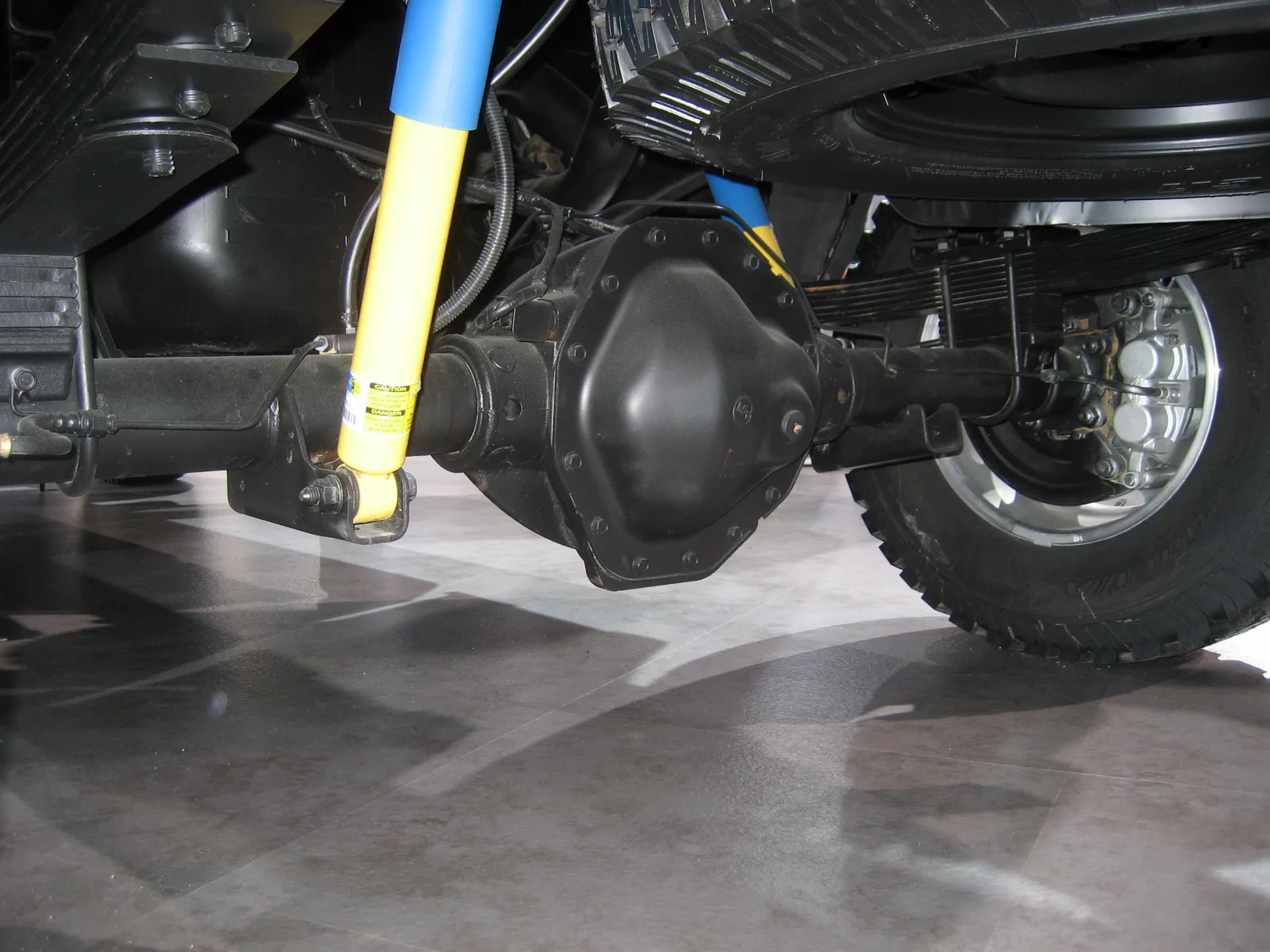

The closed housing conceals the internal mechanism. Its external shape alone cannot tell you whether it contains an open differential, a limited-slip unit or a locker. Nor does the presence of this rear-axle component by itself identify the vehicle’s complete drive system.
Sources
- Eaton: open differentials — Different wheel speeds and open-differential traction limitations
- Eaton: locking differentials — Locked equal-speed condition and different locking strategies
References checked .