Published by HALOX Co.
What a coil spring actually does
How coil springs support ride height and store bump energy, why free length is not installed height, and how constant and variable rates differ.
A suspension coil spring supports the vehicle through elastic deflection. The weight above that corner compresses the spring from its free length. When a bump moves the wheel farther upward, the spring deflects farther and stores additional energy.
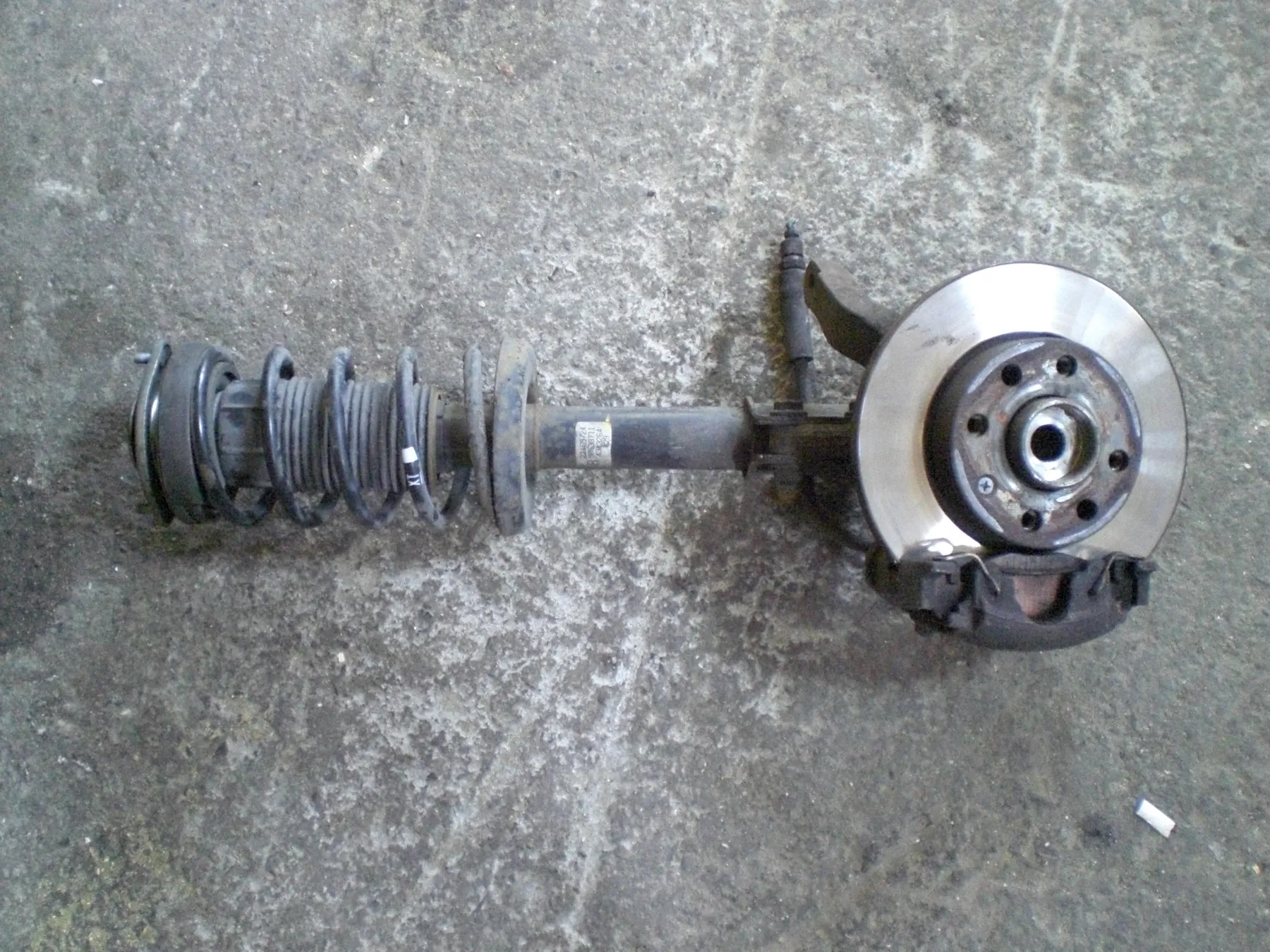


The spring, damper and wheel-locating parts can belong to one assembly, but they do different jobs. The spring supplies support. The damper controls the rate of movement as the spring compresses and extends. Monroe’s explanation describes damping as converting suspension movement into heat in the hydraulic fluid.
Height and stiffness are related, not identical
Ride height depends on the spring under load and on where it acts through the suspension. Free length alone does not tell you the installed height. The spring’s rate is the additional force required for additional deflection.
Constant-rate springs have a substantially linear response in their working range. Variable-rate designs get stiffer as they compress. MOOG distinguishes the two, while GKN describes tapered-wire springs in which the end coils and the rest of the spring respond differently to load.
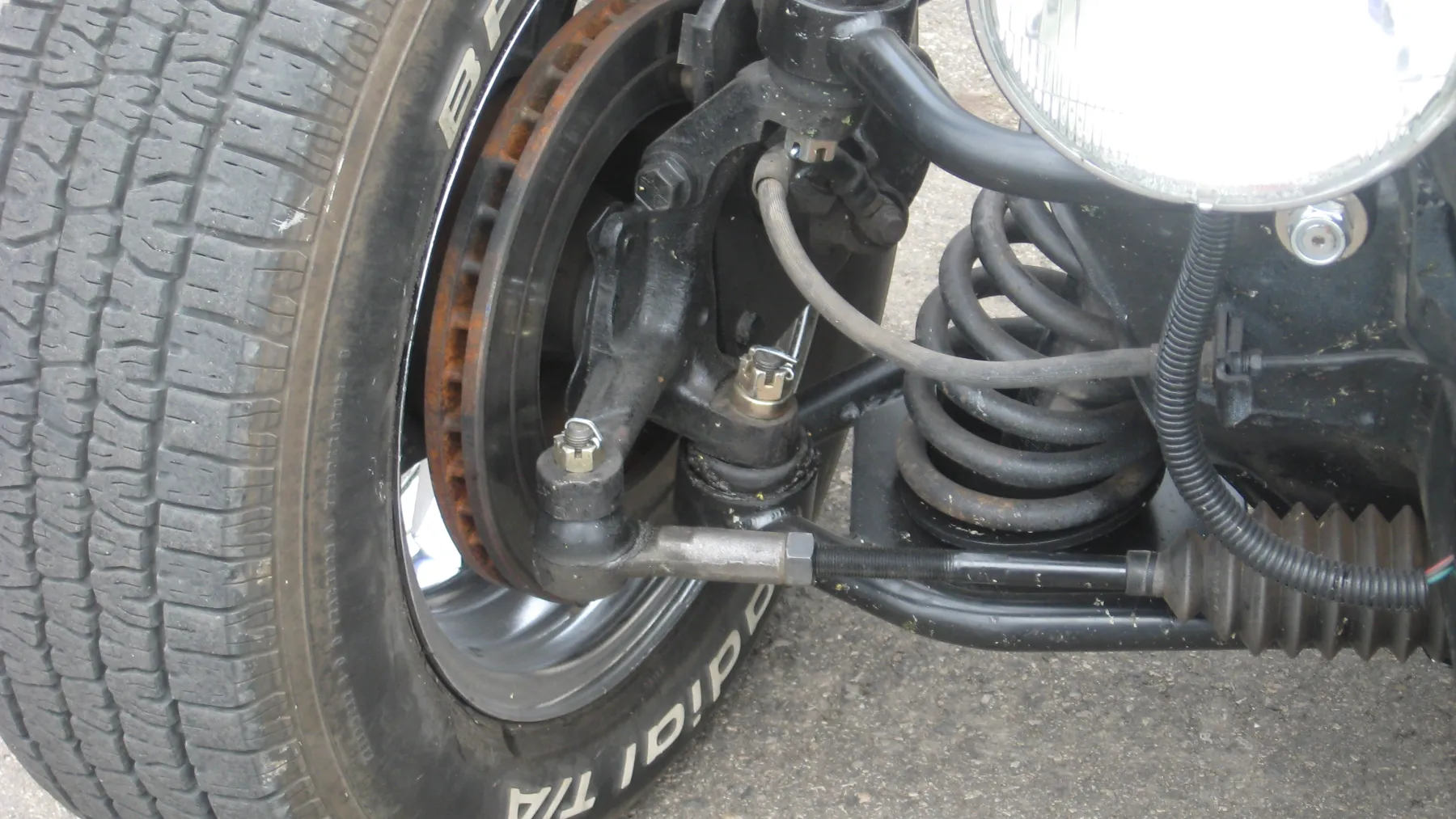

The installed example shows a separate spring and shock. A coil around a damper can provide the same division of work, but their proximity does not make the spring the whole strut.
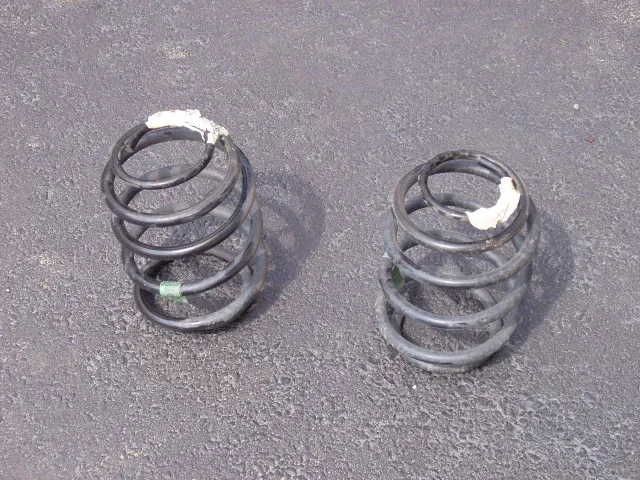

Shape, dimensions, spring seats and rate are application-specific. GKN lists these as matching requirements for replacement springs. A photograph of two loose coils cannot establish their installed ride height or whether either one matches a particular vehicle. Nor does a low corner alone prove which suspension component is responsible.
Sources
- MOOG: coil springs — Ride-height support and constant/variable rate
- GKN: suspension springs — Spring shape, seats and progressive tapered-wire designs
- Monroe: shocks versus struts — Spring support versus damping
References checked .