Published by HALOX Co.
What a brake rotor actually does
Read a brake rotor by its friction ring, center hat, and cooling passages. Vented, drilled, and worn describe different features of the disc.
The broad ring behind the wheel is the part the pads rub. It turns with the hub. The caliper holds the pads against its two faces, and friction produces the braking torque that slows the wheel. Disc and rotor are two names for this same part. Ferodo’s engineering overview follows that force through the disc, hub, and wheel.
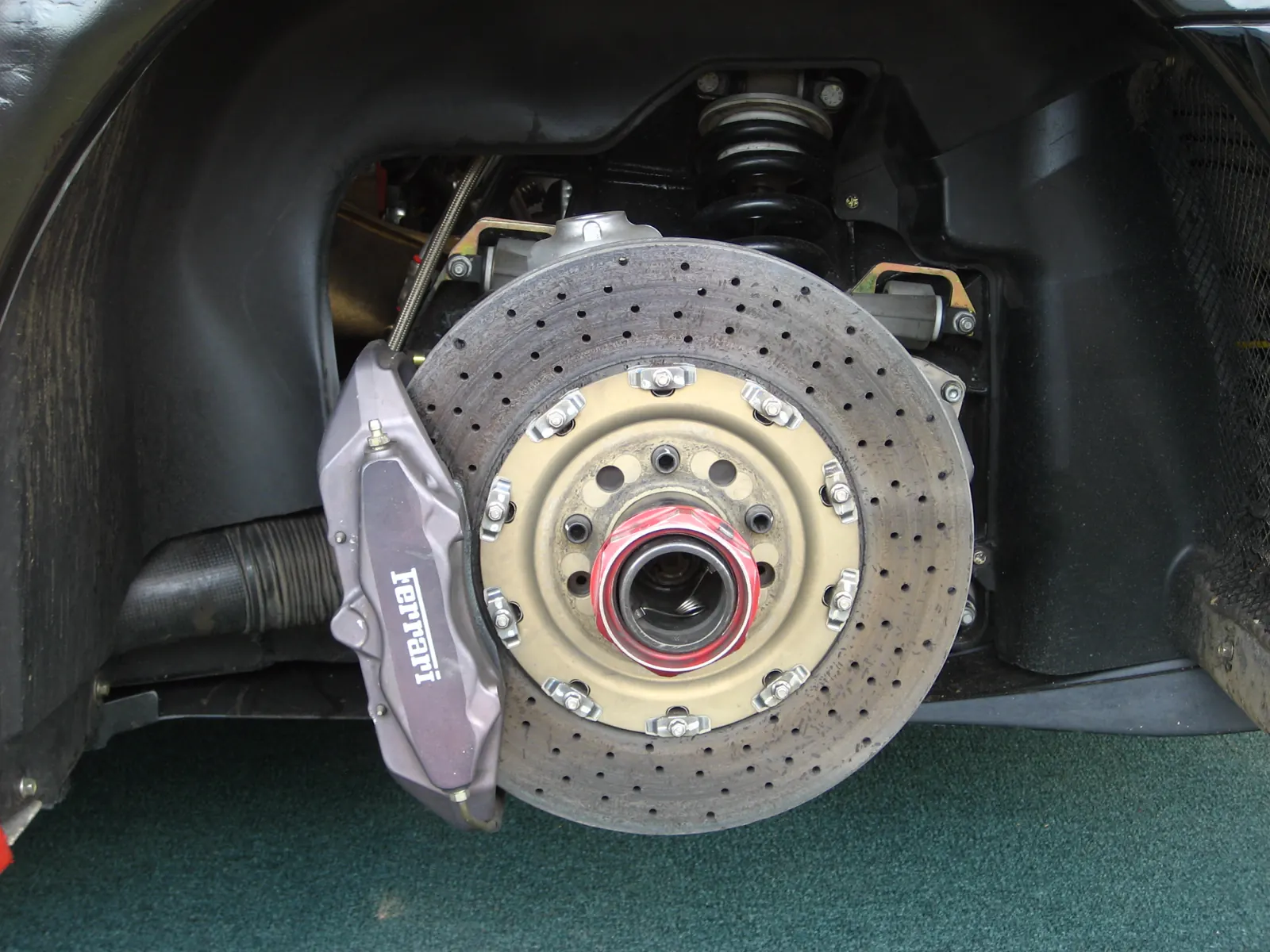

The ring does two jobs
The outer ring is the friction surface. The raised center, often called the hat or bell, connects that ring to the hub. Together they provide a path for braking torque. The pads supply the rubbing material; the caliper supplies the squeeze.
Braking also puts heat into the disc. The vehicle loses kinetic energy as the pad and rotor surfaces work against one another. The disc absorbs heat and passes it to its surroundings. That is why a rotor has to be judged as a thermal component as well as a flat surface for the pads. Ferodo’s account of braking friction explains both roles.
Vented and drilled describe different things
A solid disc has a solid braking ring. A ventilated disc has two friction faces separated by an internal space, with vanes or other supports between them. Air can pass through that space to carry heat away. The cutaway below shows the internal construction of a smooth-faced ventilated rotor. Its face does not need visible drill holes for the disc to be ventilated.
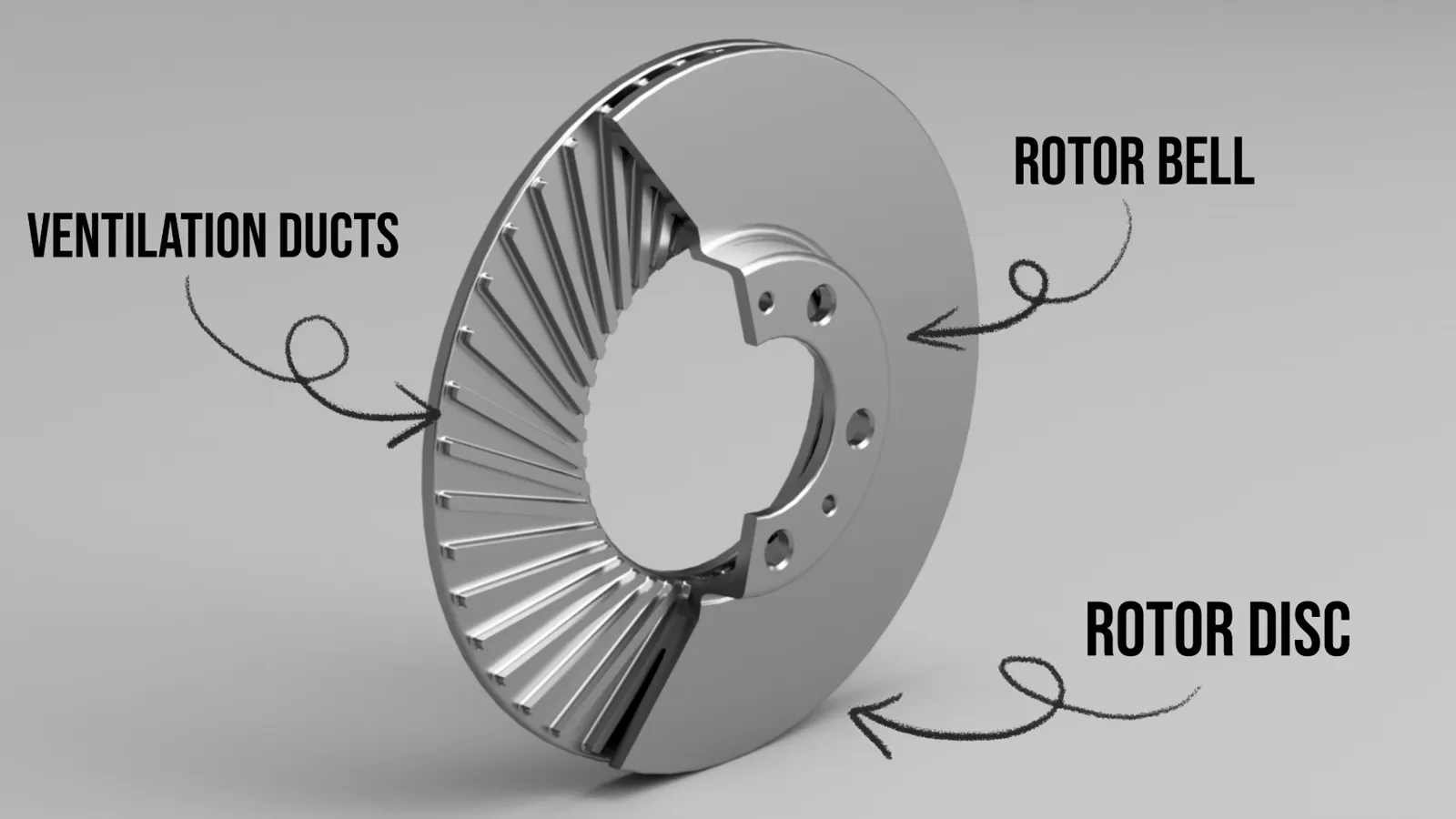

Drilling describes holes in the friction face. Slots are grooves in that face. Those features address the pad-to-disc contact as well as cooling. For its Xtra discs, Brembo describes water and gas removal and a cleaning action on the pad. It also notes that drilling creates local weak points which the design must account for. Brembo’s Xtra explanation is about a tested product, not a reason to add holes to an existing disc.
Reading the two terms separately helps: vented tells you about the construction between the faces; drilled tells you about features in a face. A smooth-looking rotor may already have internal cooling passages.
Wear is a measurement, too
The rotor wears along with the pads. As the disc gets thinner, its thermal capacity and strength change. Manufacturers specify a minimum thickness for that part. Brembo explains the marked MIN TH limit in its disc-thickness guidance.
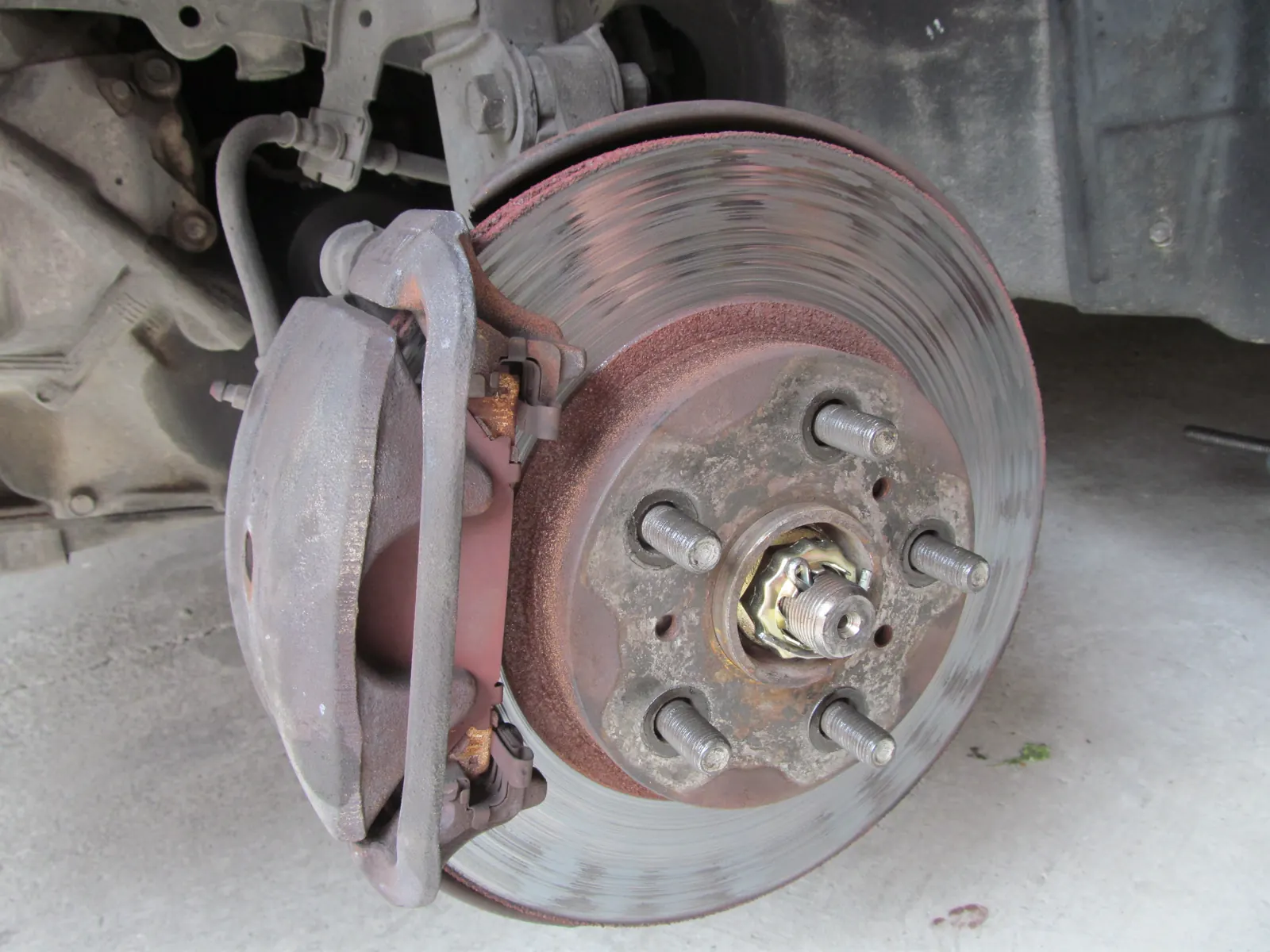

A photograph can show grooves or damage, but it cannot supply that thickness measurement or a complete brake inspection. The limit belongs to the particular disc. The pattern on its face does not establish that it is safe to keep using.
Sources
- Ferodo: engineering essentials — Braking torque and heat
- Ferodo: brake-disc friction — Friction and heat dissipation
- Brembo: Xtra discs — Product-specific drilling benefits and limits
- Brembo: minimum disc thickness — Wear and the marked MIN TH limit
References checked .